Getting Visibility of Supply Directly from the Port: The Role of AIS and Ship Tracking
AIS data combined with radar and satellite imagery turns vessel movement into a reliable supply signal.
Introduction
In the world of raw material logistics, the port is the ultimate bottleneck. For steel producers, knowing exactly what is on the water—and when it will truly arrive—is the difference between a smooth production cycle and a costly shutdown. While the Automatic Identification System (AIS) has been around for years, its raw data is often noisy, incomplete, and operationally shallow.
Solain takes a different approach. We don't just "show dots on a map." We combine global AIS signals with advanced radar (SAR) and satellite imagery to turn vessel movements into high-fidelity supply signals that planners can actually trust.
The Problem with Raw Data
Most logistics teams rely on basic tracking tools or manual updates from shipping agents. These updates are often plagued by "data lag." A vessel might report an ETA that doesn't account for port congestion, weather patterns, or slow-steaming for fuel efficiency.
Uncertainty around the exact tonnage currently en route forces mills to maintain conservative inventory buffers. When a vessel is delayed unexpectedly, the "visibility gap" can lead to emergency sourcing, production slowdowns, or inefficient schedule changes that ripple through the entire plant's operations.
Solain's Solution: Predictive Maritime Intelligence
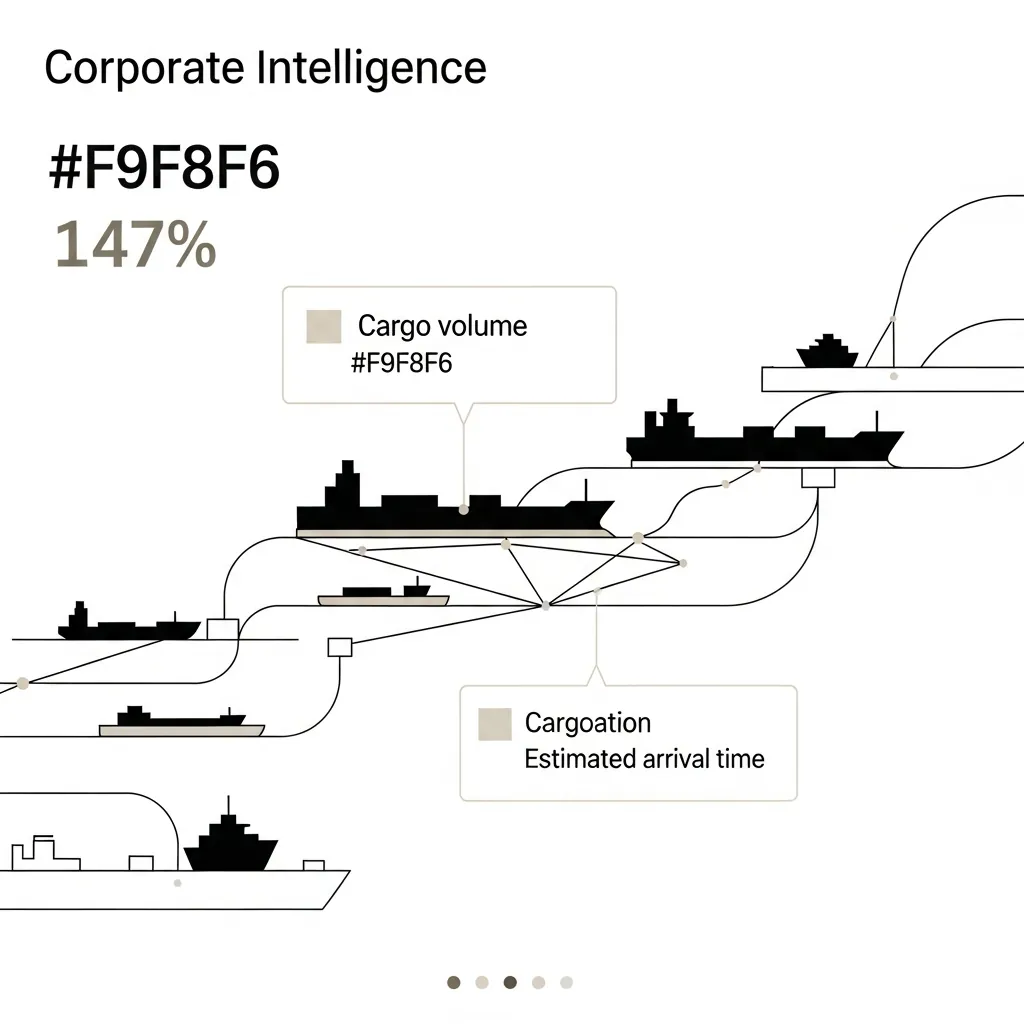
Solain ingests millions of AIS data points daily and enriches them with multi-sensor satellite data. Our AI models analyze historical patterns and real-time conditions to estimate:
- Predictive Routing: We calculate the most likely path a vessel will take, accounting for current weather and sea states.
- Dynamic ETA: Our arrival forecasts are updated in real-time, often proving more accurate than the vessel's own reported ETA.
- Cargo Intelligence: By analyzing vessel class, draft changes, and loading durations at the origin port, we estimate the actual tonnage of material on board.
This transforms maritime tracking from a passive observation task into a proactive intelligence tool.
Benefits for Your Team
- Production Planners: Use reliable arrival windows to sequence furnace charges and minimize downtime.
- Procurement Leaders: Time your purchases by knowing exactly how much material is currently in the "pipeline" at any given moment.
- Logistics Managers: Anticipate port congestion days in advance and adjust yard operations to ensure rapid unloading and throughput.